








The email inbox: attackers’ favourite gateway into your company
March 18, 2026 | Jordi Genescà Prat
Cibersecurity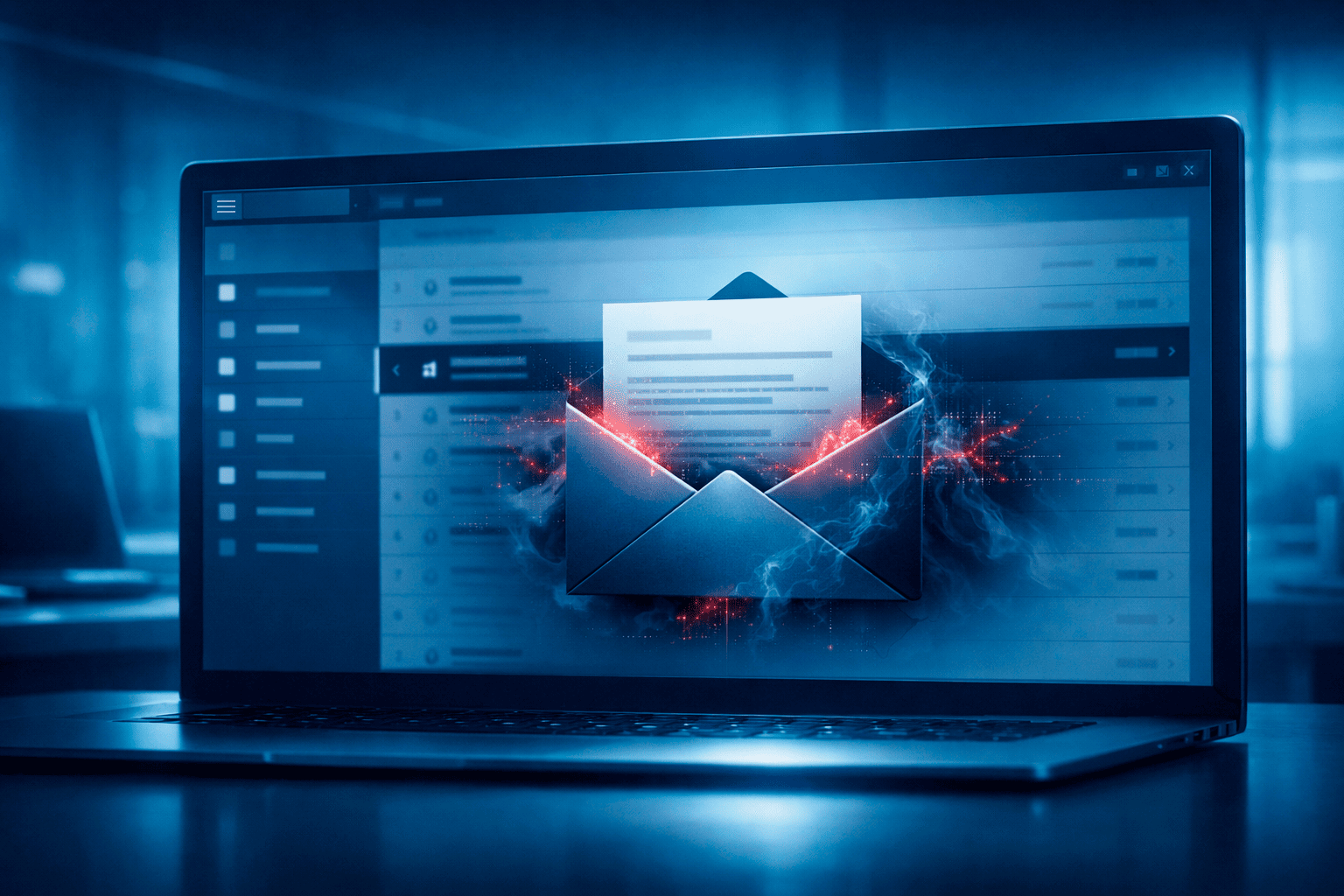
Email security is something many organisations underestimate. Over the years, companies have invested heavily in protecting their websites: SSL certificates, firewalls, cloud infrastructure and backup systems.
Yet one door often remains surprisingly exposed: corporate email.
Email continues to be one of the most widely used communication channels in business, but it is also one of the most common entry points for cyberattacks. In fact, a large proportion of corporate security incidents start with something as simple as a message arriving in an employee’s inbox.
What makes this particularly concerning is that many of these attacks do not rely on sophisticated technical exploits. Instead, they rely on something much simpler: trust.
When an email appears legitimate — perhaps mimicking a supplier, a bank or even a colleague — the instinct is often to trust it. That moment of trust is exactly what attackers are counting on.
The email inbox remains the most effective attack vector
Multiple cybersecurity reports highlight a worrying trend: most corporate security incidents begin with a malicious email.
The reason is straightforward. Email is universal within organisations. Every employee relies on it, many workflows depend on it, and messages often require quick responses.
This makes it the perfect tool for attackers.
A single email can persuade a user to click a fraudulent link, download a malicious attachment or unknowingly provide credentials to internal systems. Once those credentials are compromised, attackers may gain access to corporate environments without ever needing to breach servers or exploit vulnerabilities.
Sometimes the most effective attack is simply sending the right message to the right person.
Phishing: when deception looks completely legitimate
Phishing attacks are a form of social engineering designed to trick users into revealing sensitive information.
The targets may include passwords, access credentials to internal tools, financial data or confidential customer information.
The attack usually follows a familiar pattern. A message is sent that appears to come from a legitimate source. It might mimic a Microsoft 365 alert, a security notification, an invoice from a supplier or a message from the IT department. The email typically includes a link or an urgent request encouraging the recipient to act quickly.
When the user clicks the link, they are redirected to a page that looks almost identical to the legitimate service. Believing it to be genuine, they enter their login credentials and unknowingly hand them directly to the attacker.
Modern phishing campaigns are increasingly sophisticated. Emails are professionally written, branding is replicated convincingly and fake websites are almost indistinguishable from the real ones. Even experienced users can struggle to detect them.
When attackers impersonate the CEO
One of the most damaging forms of email-based attack is known as CEO fraud, or more broadly Business Email Compromise (BEC).
In this scenario, attackers impersonate a senior executive within the organisation and send a message to someone in finance or administration requesting an urgent payment or transfer.
These emails typically rely on three psychological triggers: urgency, confidentiality and authority.
For example, the message may claim that the CEO is travelling or in a meeting and needs a transfer to be processed immediately. The attacker may also ask the recipient to keep the request confidential because it relates to a sensitive business matter.
Faced with apparent pressure from senior leadership, employees may act quickly without verifying the legitimacy of the request.
This type of fraud has caused millions in financial losses worldwide. In many cases, attackers never compromise internal systems. They simply manipulate people.
How to protect corporate email
Protecting corporate email security requires more than basic spam filters. Organisations need mechanisms that verify the authenticity of email messages and help prevent impersonation attempts.
Key technologies include SPF, DKIM and DMARC. These authentication mechanisms allow receiving mail servers to verify whether messages are legitimately authorised by the sending domain.
When properly configured, they significantly reduce the risk of phishing attacks and prevent attackers from abusing company domains to deceive employees or customers.
Additional technologies can further strengthen trust in legitimate communications. One example is BIMI, which allows companies to display their verified logo next to their emails in supported inboxes. While it may appear cosmetic, this visual signal helps recipients recognise authentic messages and reinforces brand legitimacy.
If you want to learn more about how these mechanisms work and how they can help protect your organisation from phishing attempts, you can visit our page on phishing protection.
Email security is also business security
Email will remain a fundamental tool for business communication for the foreseeable future. However, its importance also makes it one of the most attractive targets for cybercriminals.
Every day, millions of fraudulent emails are sent with the goal of stealing credentials, manipulating employees or triggering fraudulent payments. While many organisations rely on spam filters to mitigate this risk, attackers continuously evolve their techniques.
Effective protection therefore requires more than basic filtering. It requires a combination of technology, proper domain authentication and employee awareness.
When organisations secure their email infrastructure properly, they do more than prevent cyber incidents. They protect their reputation, maintain the trust of customers and partners, and safeguard the continuity of their operations.
In an environment where email remains the primary gateway into many organisations, securing that gateway is no longer optional. It is essential.