








Guide to protecting your brand and products online
April 30, 2026 | Iñigo de las Heras Nuin
Protección de MarcaCibersecurity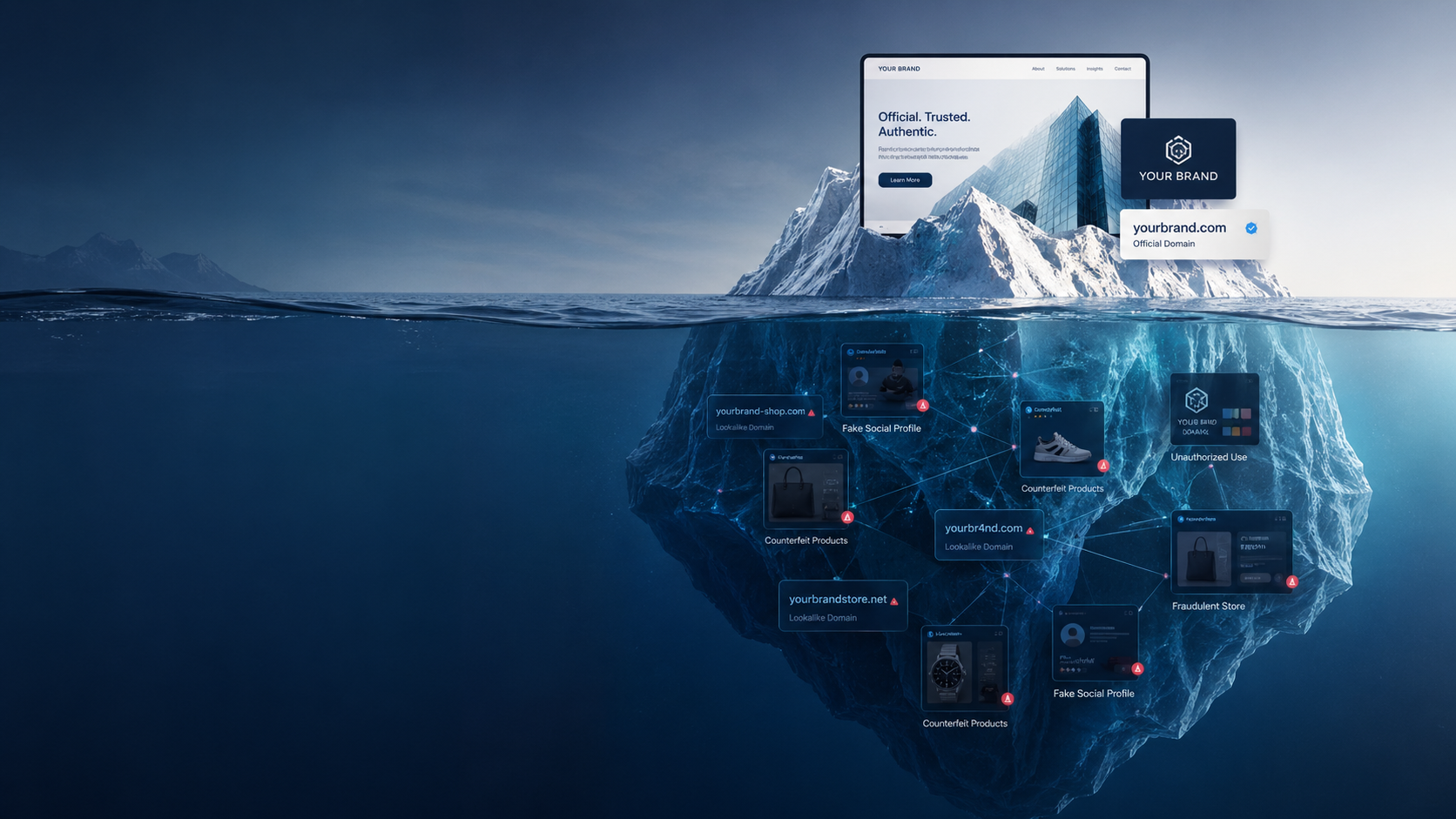
Protecting a brand online is no longer just a legal matter. Above all, it is a matter of control.
Today, any company —regardless of its size or industry— can face situations that were far less common just a few years ago: counterfeit products on marketplaces, misuse of its brand on external websites, fake social media profiles, or even phishing attacks using its identity.
The real problem is not just that this happens, but that in many cases it happens without the company being aware of it. And by the time it is detected, the impact may already be significant.
In this guide, we explain how to protect your brand and your products online in a structured way, first understanding the risks and then how to act effectively.
The problem: your brand no longer lives only on your website
For years, a company’s digital presence was relatively concentrated. Its corporate website and, at most, a few social media profiles.
Today, the situation is completely different.
Your brand can appear —and in fact does appear— across multiple digital environments at the same time: international marketplaces, third-party online stores, social media platforms, mobile apps, or even domains that imitate yours. This multiplies visibility opportunities but also significantly increases exposure to risk.
The more distributed your brand is, the harder it becomes to maintain control over how it is used. As a result, it becomes easier for third parties to use it without authorisation.
Main risks to your brand and products
Before you can protect your brand, it is essential to understand what you are up against. These risks are not theoretical — they are real situations affecting companies across all industries:
- Product counterfeiting: third parties sell products that imitate your brand, directly impacting your sales and perceived quality.
- Brand misuse: websites or online stores use your name or visual identity to build trust, without having any connection to your business.
- Phishing and fraud: the creation of websites or communications that impersonate your brand to steal data or money from your customers.
- Fake social media profiles: accounts that appear to be official and may interact with users, spread misinformation or damage trust.
The most common mistake: acting only when there is a problem
One of the most common mistakes in brand management is taking a reactive approach.
Many companies only act when they detect a clear case, such as counterfeiting or fraud. However, by that point, the issue has already developed. Users may already have been affected, the brand may have been exposed in a negative context, and trust may have been compromised.
The most effective approach is not to react, but to anticipate. And for that, continuous monitoring is essential.
Step 1: monitor where your brand appears
The first step in protecting your brand is gaining visibility. You cannot manage or protect what you do not know.
This means understanding at all times where your brand appears, who is using it and in what context. It is not about occasional searches, but about establishing a system of continuous monitoring across key digital environments.
This is where many strategies fall short.
Traditionally, monitoring has been based on keywords. The problem is that counterfeiters have learned to bypass them: removing logos, altering descriptions or using ambiguous terms to avoid detection.
That is why effective brand protection now requires more advanced technologies, such as image-based detection powered by artificial intelligence.
Solutions like Deep Vision make it possible to monitor and detect fraudulent products even when they attempt to hide using evasive techniques. Some of its key capabilities include:
- Text recognition within images (OCR – Optical Character Recognition): detects brand references even when logos are not directly visible.
- AI-powered visual context recognition: identifies products based on shape, texture or features, even when not properly labelled.
- Image search and advanced visual matching: finds matches even when images have been modified, rotated or edited.
- Detection of imitations and variations: identifies not only exact copies but also similar products attempting to replicate design or packaging.
- Global coverage without language barriers: detects infringements across markets without relying on keywords or translations.
Thanks to this type of technology, it is possible to identify infringements that traditional text-based systems simply cannot detect.
Step 2: detect fraudulent or unauthorised uses
Once you have visibility, the next step is to interpret the information correctly.
Not all uses of your brand are problematic, but it is crucial to quickly identify when there is a real risk.
Thanks to advanced systems like Deep Vision, detection goes beyond exact matches. It becomes possible to identify products that imitate the design, colours or packaging of a brand, even when they have been altered to avoid detection.
In addition, artificial intelligence can analyse product context and detect inconsistencies, making it easier to identify infringements that would otherwise go unnoticed.
Step 3: remove illegal or fraudulent content
Detection is not enough. Real protection depends on the ability to act.
Removing counterfeit products, taking down fraudulent websites or managing fake profiles are essential steps in protecting your brand.
The challenge is that each platform operates differently, making manual management slow and difficult to scale.
That is why it is important to act with criteria and prioritisation, ensuring each case is handled efficiently.
Step 4: centralise control of your brand
One of the biggest challenges is fragmentation.
Your brand may be used across multiple channels at the same time. Without a global view, management becomes inefficient.
That is why having a system that enables centralised control, global visibility and rapid action is essential.
From reacting to controlling: the key to real protection
Companies that truly protect their brand are not the ones that simply remove incidents.
They are the ones that have built systems based on continuous monitoring, early detection and immediate action.
That is why more and more companies rely on solutions like Guardian Anti-Piracy, which allow them to monitor, detect and act from a single environment.
Conclusion: your brand needs active protection
In today’s digital environment, your brand is constantly exposed.
Not protecting it does not mean there is no risk.
It means you are not seeing it.
Protecting your brand and your products online is not a one-time action — it is an ongoing process.
If you want to see how you can monitor, detect and remove misuse of your brand in a centralised way, you can do so here: Guardian Anti-Piracy.
Because today, protecting your brand is not just about defending it.
It is about having control.